


Thomas Coutrot[1] and Coralie Perez[2]
Over the last decade, public debate has focused on the loss of meaning in work. It has been pointed out as a factor in psychological suffering (Mieg, 2019), and the press has reported on the career choices or career changes of graduates or employees in search of meaning[3]. The global success of bullshit jobs (Graeber, 2018) has revealed that many employees see their jobs as meaningless. More recently, the COVID-19 health crisis has further intensified debates about the meaning of work (Chevalier, 2020; Coutrot and Perez, 2020; Michaelson, 2020).
The growing interest in this issue can be linked to the deleterious effects of financialisation on labour management and working conditions (Palpacuer et al., 2007; Guyonvarch, 2008; Perez, 2014; Bruyère et al., 2017). In order to continuously optimise financial returns, shareholder governance imposes continuous processes of mergers and acquisitions, outsourcing, and spin-offs (Appelbaum et al., 2013; Thompson, 2013). The organisation has become mobile and unpredictable, its contours blurred, its decision-making centres distant. With digital tools and ‘datification’ (Stein et al., 2019), work is codified and standardised, the permanent obligation of numerical reporting feeds a ‘governance by numbers’ (Desrosières, 2008; Supiot, 2015) or ‘metric power’ (Beer, 2016), and the determination of work objectives and the evaluation of its quality increasingly depend on numerical indicators that make no sense to workers (Moore, 2018). Alongside the previously identified factors (work intensification, loss of autonomy, emotional work, lack of recognition and social support, insecurity) (Gollac and Bodier, 2011), the loss of meaning in work thus appears to be an emerging psychosocial risk factor.
The academic literature in economics has long ignored the very idea that work itself could have a meaning other than its monetary remuneration. It is true that since the 2000s, the ‘happiness economics’ movement has been studying ‘satisfaction’ or ‘well-being’ at work, and institutional economists have been interested in ‘job quality’, but without mentioning the idea that work could have a meaning in itself (Perez, 2017).
First, we conduct a multidisciplinary literature review to show what can be grasped through the concept of ‘meaning of work’ from a socio-economical point of view. We adopt the approach of critical theory based on ‘living work’ (Cukier, 2017), updated by the psychodynamics of work (Dejours, 2013). This leads us to retain three constituent dimensions of the meaning of work: the feeling of social utility, the capacity for development, and ethical coherence. In a second step, based on the exploitation of data from the 2013 Working Conditions Survey, we propose a metric of the meaning given by employees to their work in 2013 by constructing an individual score for each of these three dimensions. Finally, we link the socio-demographic characteristics of employees and their professional environment to the meaning they give to their work.
1. The meaning of work, an ‘essentially contested concept’[4]
The concept of the meaning of work, which has been widely used for decades in psychology and management science, has only very recently aroused the interest of economists: ‘Among those with an interest in understanding human behavior, economists are unusual in their neglect of meaning’ (Karlsson et al., 2004). Hence, to understand this contested concept, a truly multidisciplinary approach is unavoidable.
1.1. The recent conversion of economists
In academic economics, the question of the meaning of work has long been ignored. For the standard theory, an individual’s labour offer is determined on the basis of a trade-off between consumption and leisure. Work has no value in itself; on the contrary, it only acquires meaning through the remuneration that compensates for its intrinsic drudgery (‘disutility’) and allows the worker to satisfy his consumption needs. Thus, the decisions of economic agents on the labour market result exclusively from a monetary calculation.
It is true that labour economists have long noted the major economic role that non-monetary aspects, such as job satisfaction, can play (Freeman, 1977; Akerlof, 1982; Mueller and Price, 1990; Frey, 1997): ‘Any realistic portrait of labor turnover must include a role for nonpecuniary rewards’ (Akerlof et al., 1988). The ‘happiness economics’ movement (Layard, 2005; Davoine, 2012; Senik, 2014) has proposed an expanded view of utility, going beyond the monetary dimension: in this framework, work itself is likely to provide satisfaction, which can help determine certain key labour market behaviours (Clark et al., 1998; Clark, 2010).
Nevertheless, until recently, few economists have focused on the non-monetary determinants of job satisfaction. When they have, the most commonly cited have been autonomy, security (Benz and Frey, 2008), relationships with colleagues, and promotion prospects (Millan et al., 2013). The content of the ‘work itself’ (Clark, 2001) or its ‘interest’ (Sousa-Poza and Sousa-Poza, 2000) have been rarely mentioned, and the authors made little attempt to formalise a concept of ‘meaning of work’. Economic research on job quality, encouraged by the European Commission since the end of the 1990s, is interested in objective dimensions of employment that are conducive to well-being at work: neither the meaning of work nor even job satisfaction are among the six dimensions[5] retained by international institutions to understand job quality (Guergoat-Larivière and Marchand, 2012).
Things began to change with the emergence, from the early 2000s, and the strong growth, in the 2010s, of a current of literature which, following Favereau (1989), could be described as a ‘doubly extended standard theory’[6]. Without ever explicitly using the term ‘meaning of work’, this current seeks to account for the intrinsic motivation of workers through their adherence to the ‘mission’ of their organisation (François, 2000; Bénabou and Tirole, 2003; Besley and Gathak, 2005; Prendergast, 2008; Hannes and Tobias, 2015; Henderson and Van den Steen, 2015; Carpenter and Gong, 2016; Cassar and Meier, 2018; Cassar and Armouti-Hanssen, 2019; Barigozzia and Burani, 2019). The authors start from the observation, taken directly from the psychology literature, that individuals are not only selfish calculators, but can also be motivated by ‘prosocial’ values and inclinations: ‘psychologists and sociologists describe people’s behaviour as being influenced by a strong need to maintain conformity between one’s actions, or even one’s feelings, and certain values, long-term goals, or identities that they seek to defend.’ (Bénabou and Tirole, 2006; our translation). These works essentially aim at mathematically modelling the interactions between various types of motivations (selfish or prosocial) and/or empirically testing their relationships.
Beyond the motivations linked to the internalisation of the organisation’s general ‘mission’, some authors, drawing on social psychology (Deci and Ryan, 1985), explicitly use the notion of ‘meaning of work’ by integrating the work activity itself as a possible source of meaning for the worker (Cassar and Meier, 2018), via three of its components: autonomy, the feeling of competence and social relations (feeling of relatedness). The meaning of work is thus recognised as a non-monetary motivation rooted in working conditions themselves.
The growing attention to ‘prosocial motives’ among mainstream economists since the late 2000s is probably a response to the discrediting of the Homo economicus model, but above all to the negative consequences of metric power on work and society, which raise unprecedented expectations from companies, as evidenced by the lively debates on alternatives (‘B corporations’ or ‘mission-based companies’) to shareholder governance: ‘organizations today are increasingly judged on the basis of their relationships with their workers, their customers, and their communities, as well as their impact on society at large - transforming them from business enterprises into social enterprises’ (Deloitte, 2018; cited in Cassar and Meier, 2018).
Although it may seem paradoxical, institutional economists have been slower to address the meaning of work. Those who have done so —to our knowledge, mainly John W. Budd and David A. Spencer— base their approach on the concept of alienation: ‘work roles can conflict with one’s true sense of self, leading to an inauthenticity that Marx labeled alienation’ (Budd and Spencer, 2015, p. 5). Alienation is then rooted in the capitalist organisation of work: ‘for many workers, work is performed with limited discretion and without much creative content […] this key point is missed in recent studies of happiness at work’ (Spencer, 2009, p. 130). From a critical perspective, research should strive to ‘capture the full importance and meanings of work in human life ’ (Budd and Spencer, 2015, pp. 182-183). So far, however, these intentions have not lead to a precise conceptualisation of the meaning of work, which is still defined very generically as ‘an encompassing concept: it includes the extrinsic and intrinsic aspects of work and is directly related to the characteristics of jobs that workers do’ (Spencer, 2015, p. 23).
1.2. Management sciences: the meaning of work as a ‘psychological state’
Unlike in economics, the meaning of work is a recurrent theme of study in psychology (Judge et al., 2017), sociology (Hannique, 2004; Loriol, 2011; Yeoman et al., 2019[7]), and especially in management science, where there are countless studies on the link between meaning of work and workers’ behaviour.
Although the criteria for assessing meaningful work are very diverse, two main approaches can be distinguished: the first approach, which could be called ‘nominalistic’, is based essentially on the worker’s direct judgement of the meaning of its work; the second approach (‘essentialist’) sets out a number of conditions that a work situation must meet to be meaningful[8].
The abundant managerial literature on the meaning of work —Brent et al. (2010) provide a meta-analysis including more than 200 articles on the subject— is dominated by the nominalistic and subjective approach: ‘the vast majority of these works adopt a psychological rather than a sociological perspective, rooted in the individual subjective experience of work’ (Rosso et al., 2010) rather than in the subject’s relationship with social norms and value systems. Meaningfulness of work is defined as ‘the degree to which an employee feels the job has value and importance’ (Hackman, Oldham, 1976); ‘the value of a work goal or purpose, judged in relation to an individual’s own ideals or standards’ (Spreitzer, 1995). It is a ‘psychological state’ (Humphrey et al., 2007) that mediates between the objective characteristics of work (working conditions, autonomy, social support, feedback, etc.) and ‘outcomes’ such as job satisfaction, commitment, performance, absenteeism, and turnover, among others.
This ‘psychological state’ can be measured by a score based on a few direct questions. There are at least 28 different scales for measuring meaningfulness at work (Bailey et al., 2019), such as the COPSOQ[9] (Copenhagen Psychosocial Questionnaire) (Nübling, 2015), or the WAMI[10] (Work As Meaning Inventory) (Steger et al., 2012). The management literature thus evaluates the links between work organisation and personnel management practices, the psychological state known as ‘meaningfulness’ generated –or not– by these practices, and subjective or objective outcomes, such as job satisfaction or absenteeism.
As for the ‘essentialist’ approach, which is less often used, it goes back to the seminal work of Herzberg (1959), who distinguishes two types of motivating factors: extrinsic or ‘hygiene’ factors (salary, working conditions, etc.), which cause dissatisfaction if they do not reach a minimum level, but have no stimulating effect beyond it; and intrinsic or ‘motivational’ factors, such as the interest of the work, autonomy, prospects for development, and recognition for the work accomplished.
Since then, some authors (Wrzesniewski et al., 1997; Lips-Wiersma and Moris, 2009; Lips-Wiersma and Wright, 2012; Steger et al., 2012) have investigated the different dimensions of work that can make it a meaningful experience. Based on numerous interviews with workers and an existentialist philosophical approach, Lips-Wiersma and Wright (2012) identify four dimensions of meaning: ‘the development of the inner self, unity with others, service to others and the expression of full potential’. The authors propose a measurement scale (Comprehensive Meaningful Work Scale) consisting of 28 questions. The first dimension, ‘development of the inner self’, refers to the need for authenticity and ethical coherence[11]; ‘unity with others’ touches on social support; ‘service to others’ alludes to social usefulness and work environment[12]; and ‘expression of full potential’ concerns the development of skills[13]. For the authors, the meaning of work cannot be the result of a managerial policy of communication, as it is a fundamental ‘human need’; it ‘satisfies our inescapable interests in being able to experience the constitutive values of autonomy, freedom, and dignity’ (Yeoman, 2014).
1.3. Critical theory: ‘living’ and transformative work
Many aspects of working life, including pay, can therefore contribute to people feeling that their work is meaningful. However, we choose here to focus on concrete work itself, as a productive activity with a useful purpose. Work activity, unlike play, is not carried out solely for the pleasure it may provide, but for the production of a good or service. What can give intrinsic meaning to his concrete work in the eyes of the worker is therefore the impact of his activity on the world (the good or service produced) and on himself (e.g., the pleasure potentially felt during the work activity). Taken in this sense, ‘meaning of work’ is distinct from ‘meaning in work’, which is provided by the material (salary, career) or psychological (recognition, sociability) rewards attached to employment. This is not far removed from the concept of ‘calling’, at least when it is defined as ‘the belief that the work contributes to the greater good and makes the world a better place’ (Wrzesniewski et al., 1997; Steger and Dik, 2009), or the concept of ‘mission’ (Bénabou and Tirole, 2003). From this perspective, it is the sense of positively transforming the world, and not just doing something for oneself, that can give meaning to work (Arnoux-Nicolas et al., 2017).
Work has a double transformative function. It transforms nature to produce ‘objects useful to life’, but it also transforms the human being who works: ‘At the same time as it acts on external nature and modifies it, it modifies his own nature and develops the faculties which lie dormant in him’ (Marx, 1867, I-3, p. 180). Since then, ergonomics, sociology, psychology and, more particularly, work psychodynamics have largely confirmed this diagnosis: ‘working is not only producing or manufacturing, it is not only transforming the world; it is transforming oneself and, in the best of cases, growing, building one’s own health and identity’ (Molinier, 2002).
We therefore distinguish two dimensions of the intrinsic meaning of work. The first concerns purpose: the impact of concrete work on the world (‘service to others’ in the terms of Lips-Wiersma and Wright, 2012). The worker feels that his work has meaning, he feels a ‘sense of usefulness’ (Dejours, 2013) when he sees that the concrete product of his work makes it possible to meet the needs of its recipients.
The second dimension relates to ethical conflicts. The sense of usefulness is not enough if the concrete work causes undesirable side effects. In some situations, satisfying customer or user needs, as conceived by management, is subordinated to the valorisation of abstract work as capital, at the expense of professional norms: employees are then prevented from experiencing the feeling of ‘work well done’, the ‘sense of beauty’, the recognition of the quality of work (Dejours, 2013). The logic of abstract work can also encourage the violation of ethical standards in the course of work, thus harming others or nature.
These ethical conflicts can reduce or destroy the meaning of work in the eyes of the worker, hindering the ‘development of the inner self’ (Lips-Wiersma and Wright, 2012). The inability to do ‘good work’ can damage mental health (Clot, 2014), even when official quality indicators are green. This is the case of the counter clerks at the French Post Office who, for the sake of financial profitability, are encouraged by management to ask users to unpack their parcels, even though they are well-wrapped, in order to buy a pre-stamped parcel (Clot, 2010, p. 42). Or the bank advisers who feel ‘encouraged to do anything’ to sell financial products to their clients (Gilson, 2010, p. 20). This dimension of the impact of work on the world is thus split into two sub-dimensions: the usefulness of goods and services, and the conformity of the work process to ethical and professional standards.
In addition to the external world, work also transforms the worker himself. In order to carry out his tasks, he has to mobilise his subjectivity and intelligence to deal with the unforeseen events that go beyond the orders and procedures prescribed by management. The deployment of this ‘living work’ (Henry, 1990; Dejours, 2013) is a source of development of action capacities and construction of psychological health (‘expression of full potential’, in the terms of Lips-Wiersma and Wright, 2012): ‘overcoming the difficulty of the task is emerging victorious and strengthened from the confrontation with the resistance of reality; it means, at the same time, to increase the person’s powers of action, perception and sensitivity, and thus, to increase the resulting sense of psychic identity, as control over one’s vital power’ (Dejours et al., 2018, p. 90).
This is why the organisation of work is decisive for it to be meaningful:
[T]he level of competence required for the job, the different abilities that must be exercised, the potential for developing these abilities and acquiring new ones through work, the possibility of personal development, self-expression and the exercise of one’s power of judgement, all contribute to the quality of work in a way that makes it more or less meaningful or fulfilling for the worker (Dejours et al., 2018, pp. 59-60).
Conversely, through technological and managerial tools aimed at standardising tasks and normalising financial returns, ‘subjectivity –living work– is gradually eliminated from the real process of production, while its aspect of objective instrumental device continues to grow’ (Henry, 1990, p. 161; quoted in Cukier, 2017).
We will now attempt to operationalise these concepts statistically by using those questions from the French surveys on working conditions that correspond to these different dimensions.
2. Construction and characteristics of meaning of work indicators
Acting on the world by feeling useful to others and without violating one’s moral and professional values, performing one’s ‘living work’ by developing skills and creativity: these are the dimensions of the ‘meaning of work’ that we shall now analyse statistically using the 2013 Working Conditions survey (Box 1).
Box 1. The data: the 2013 Working Conditions survey
The Working Conditions surveys have been conducted by DARES, the Ministry of Labour’s studies and research department, in collaboration with INSEE, since 1978. They have been repeated every seven years since 1984. The surveys are conducted face-to-face in people’s homes and concern all working people, whether in a salaried position or not, the sample being representative of the population aged 15 and over in employment. The questionnaire contains more than 800 variables and describes in detail physical and organisational constraints, the organisation of working time, and the prevention of occupational risks, perceived health, and absenteeism due to illness.
In 2013, the system was renewed. A self-questionnaire completed by the respondent measures exposure to psychosocial risks. A postal survey was carried out among the employers of the surveyed workers in establishments with at least 10 employees, in order to find out about the structure of the company and its human resources, management, and occupational health policies.
The scope of the survey used here is all employees who responded in 2013 (excluding trainees and temporary workers, since the temporary and insecure nature of their employment makes it difficult to investigate the meaning of work): the sample comprises 27,227 individuals, and is weighted to be representative of the 23 million employees in the public and private sectors (all company sizes).
2.1. The impact of work on the world
As we have seen, this dimension is therefore split into the social utility of goods and services and ethical consistency.
2.1.1. The utility of goods and services
In the 2013 WC survey, 70% of employees say they ‘always’ or ‘often’ feel they are doing something useful for others. On the other hand, 65% say they are ‘always’ or ‘often’ ‘proud to work in their company or organisation’, most likely because they are aware of the recognition their company receives for the quality of its products or services. The two variables are strongly correlated: 52% of employees have a strong feeling of social usefulness with regard to both indicators taken together. The synthetic social utility score varies from 0 to 6: 0 for those who answered ‘never’ to both questions, and 6 for those who answered ‘always’[14].
2.1.2. Ethical consistency
By engaging their subjectivity in work, workers are exposed to possible value or ethical conflicts: the second sub-dimension of the impact of work is the possibility of acting according to their moral values (doing what feels right) and professional values (feeling that they are doing their job well). In 2013, 9 out of 10 employees said they only sometimes or never have to do ‘things they don’t agree with in their job’, while 2 out of 3 employees said they always or often have a ‘feeling of a job well done’. Finally, 7 out of 10 employees believe that they only sometimes or never ‘have to do too quickly something that would require more care’.
To summarise these variables (significantly correlated with each other) related to the feeling of being able to work in accordance with one’s values, the ethical coherence score varies from 0 (very strong ethical conflicts[15]) to 9 (very strong coherence between work and values).
2.2. Development capacity
The second dimension of the meaning of work concerns the possibility to display creativity, learn, develop skills, and achieve one’s potential, which we will call here ‘development capacity’. Work has an emancipatory potential, allowing the expression of one’s individuality and creativity (Lips-Wiersma and Wright, 2012; Spencer, 2015). In Robert Karasek’s JD-C (job demand/control) model, this dimension is present as ‘skill discretion’, a sub-dimension of the worker’s decision latitude; it is measured by questions such as ‘I have the opportunity to develop my job skills’ or ‘In my job I have to learn new things’. In the conception of the work clinic, health is identified with the ability to act on one’s environment: it is based on the possibility ‘to develop one’s individual and collective power to act on the situation by recreating it’ (Clot, 2010, p. 168). The forms of standardisation and control of work based on digital technologies, sometimes referred to as ‘digital Taylorism’ (Brown et al., 2010) or ‘neo-Taylorism’, particularly affect this dimension of meaning at work. The same is true when reporting and planning tasks take over the core of the work activity (Dujarier, 2015).
Four questions are used to identify this dimension of meaning at work. It emerges that 66% of employees feel they have ‘the opportunity to develop [their] professional skills’. Using one’s professional skills can be linked to the latitude employees have to organise their work: 81% of employees say they can ‘always’ or ‘often’ ‘organise [their] work as it best suits [them]’. Using personal skills and creativity is also a source of pleasure: 54% of employees say they ‘often’ or ‘always’ ‘‘get to do things [they] like’. This excludes boredom: 90% of employees say they only feel bored ‘sometimes’ or ‘never’. In order to summarise the information contained in these four variables (all significantly correlated with each other), the score varies from 0 (those who answered ‘always’ to the first three questions and ‘never’ to the question on boredom) to 12 (the opposite).
On the basis of these three scores, an overall score for the meaning of work is calculated by summing the centred and reduced values[16] of each of them. The distribution of the overall score shows an average score (see Fig. 1) that is slightly below the median, reflecting the presence of very poor work-related situations that pull the distribution downwards. We shall now look at the determinants of this overall meaning-of-work indicator, as well as of each dimension that makes it up.
Fig. 1: Distribution of the meaning-of-work score for employees (private and public) in 2013
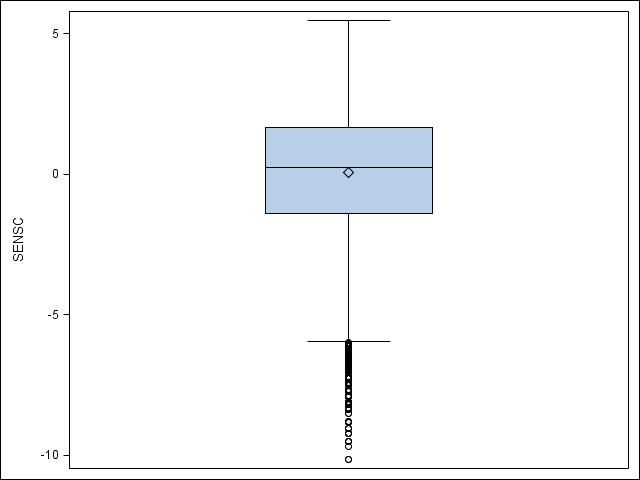
Source: 2013 WC survey. Scope: employees in the private and public sectors, on permanent or fixed-term contracts.
2.3. The meaning of work: a descriptive analysis
We now look for individual and organisational factors that are significantly correlated with the meaning-of-work score, ceteris paribus. In terms of individual characteristics, age, gender, and level of education are introduced[17]. Regarding job characteristics, the socio-professional category and the type of employment contract (stability and public or private nature of the employer) have been retained, as well as job duration and salary (the latter being often considered, as we have seen, an extrinsic motivation factor). Working in customer service is positively correlated with the meaning score –due to the greater proximity to the recipients of work–, so this variable is introduced into the analysis. Finally, the organisation is characterised by its size, its sector of activity and by whether it has undergone organisational changes and/or restructuring (declared here by the employee), on the hypothesis that they contribute to reduce the meaning-of-work score.
Box 2: ‘Essential jobs’ and the meaning of work
During the coronavirus pandemic that paralysed Europe for two months, certain professions were described as ‘essential’ because of the short-term indispensability of their activity. It is striking to note that several of these professions had, before the pandemic, a rather negative view of the meaning of work. Thus, cashiers and self-service employees (nearly 80% of whom are women) had a much lower average score for the meaning of their work than that of all employees, due to a lower feeling of social usefulness and a lower capacity for development. Handling workers, who were particularly involved in distance selling during confinement, also find less overall meaning in their work than the average employee, due to a lower sense of social usefulness and a lower development capacity.
It is also surprising that the medical professions (doctors, nurses, care assistants) do not appear among those who find their work most meaningful, with the coronavirus health crisis having demonstrated the essential nature of their activity. Among these professions, care assistants (88% women) are those who declare to find their work comparatively least meaningful, with those in the public sector even less than those in the private sector. Similarly, teachers, whose essential role was emphasised during the containment period, did not attribute any greater meaning to their work than the average employee before the pandemic. Future studies will be able to assess whether the pandemic has disrupted the hierarchy of professions according to the meaning they attribute to their work.
According to a linear OLS regression model [Table 2], for similar observed characteristics, the overall score for the meaning of work is higher among managers, but also among employees with few qualifications and those in small organisations (fewer than 50 people). Consistent with the idea of a ‘mission’ in the social interest, it is higher for employees performing care functions and, more generally, for employees working in customer service . On the other hand, employees working in handling or commercial functions see less meaning in their work relative to others ceteris paribus.
Table 2: Meaning-of-work scores –socio-demographic and work environment characteristics in 2013 (ordinary least squares regressions)
OLS regression | Social utility | Ethical consistency | Development capacity | Overall indicator |
Woman | -0,07⁺⁺ | Ns | Ns | Ns |
Age >= 50 years | 0,10⁺⁺ | 0,16⁺⁺ | 0,10⁺⁺ | 0,22⁺⁺ |
Age [30-50] | Ref | Ref | Ref | Ref |
Age <30 years | Ns | Ns | Ns | Ns |
Managers and professionals | 0,09⁺⁺ | Ns | 0,62⁺⁺ | 0,36⁺⁺ |
intermediate profession | Ref | Ref | Ref | Ref |
Clerical workers | Ns | 0,11⁺⁺ | -0,52⁺⁺ | -0,17⁺⁺ |
Manual laborers | -0,19⁺⁺ | 0,10⁺⁺ | -0,76⁺⁺ | -0,42⁺⁺ |
Level qualification<High school diploma (baccalauréat) | 0,19⁺⁺ | 0,24⁺⁺ | 0,16⁺⁺ | 0,36⁺⁺ |
Level qualification = High school diploma (baccalauréat) | Ref | Ref | Ref | Ref |
Level qualification > High school diploma (baccalauréat) | -0,08⁺* | -0,07⁺⁺ | Ns | -0,10⁺ |
Permanent contract (CDI) | Ref | Ref | Ref | Ref |
Official | 0,11⁺⁺ | -0,10⁺⁺ | 0,18⁺⁺ | 0,09⁺⁺ |
Temporary contract (CDD) | 0,19⁺⁺ | 0,32⁺⁺ | Ns | 0,35⁺⁺ |
Production, construction, | Ns | -0,16⁺⁺ | Ns | -0,21⁺⁺ |
Installation, repair, maintenance | Ns | Ns | Ns | Ns |
Security, cleaning, housekeeping | 0,14⁺⁺ | Ns | -0,42⁺⁺ | Ns |
Handling, storage, logistics | -0,27⁺⁺ | -0,16⁺⁺ | -0,48⁺⁺ | -0,51⁺⁺ |
Secretariat, data entry, reception | Ref | Ref | Ref | Ref |
Management, accounting | Ns | Ns | 0,21⁺⁺ | Ns |
Commercial, technical-commercial | -0,16⁺⁺ | -0,15⁺ | -0,16⁺ | -0,28⁺⁺ |
Studies, research and development, methods | Ns | Ns | 0,33⁺⁺ | Ns |
Teaching | 0,25⁺⁺ | Ns | Ns | Ns |
Caregiving | 0,43⁺⁺ | -0,17⁺⁺ | 0,21⁺⁺ | 0,28⁺⁺ |
Other functions | 0,09⁺ | Ns | Ns | Ns |
10-49 employees | 0,04⁺ | 0,08⁺⁺ | 0,10⁺⁺ | 0,13⁺⁺ |
50-499 employees | Ref | Ref | Ref | Ref |
500+ employees | 0,06⁺ | Ns | Ns | Ns |
Customer service | 0,22⁺⁺ | -0,14⁺⁺ | 0,22⁺⁺ | 0,16⁺⁺ |
Salary level | 0,0001⁺ | Ns | 0,0001⁺⁺ | 0,0001⁺⁺ |
Part-time | -0,11⁺⁺ | Ns | -0,12⁺⁺ | -0,12⁺⁺ |
Restructuring, change of management | -0,28⁺⁺ | -0,52⁺⁺ | -0,47⁺⁺ | -0,76⁺⁺ |
Organizational change | -0,26⁺⁺ | -0,55⁺⁺ | -0,54⁺⁺ | -0,80⁺⁺ |
Source: 2013 WC survey; scope: employees in 2013 who completed the self-assessment questionnaire, excluding trainees and temporary workers.
Reading note: - - or ⁺ ⁺ indicates a significant coefficient at the 1% level (resp. 5% for - or ⁺) in a multiple regression model (OLS) where the explained variable is the meaning-of-work score in 2013 (or one of its components).
Finally, employees who report having experienced at least one major change in their work over the past 12 months (restructuring, buyout, redundancy plan or layoff; or another organisational change that impacts their work) see significantly less meaning in their work, all else being equal, than those in more stable environments. This reduced sense of meaning is primarily due to the value or ethical conflicts brought about by these organisational changes, which also hinder employees’ development capacities. They significantly, but more marginally, affect their sense of social purpose. This is in line with what we were able to show with qualitative material, namely, that in the case of financial restructuring, the feeling of insecurity and loss of reference points, but also the difficulty of continuing to do quality work, lead employees to reflect critically on the functioning of their company, or even on the functioning of society, wondering what sense there is in still being involved in work (Perez, 2014). Our results are also broadly in line with those obtained by Bruyère and Lizé (2020) based on the same survey but using a different method.
Conclusion
In our theoretical approach, based on the critical theory of living work, work finds meaning when its experience allows the person to feel capable of positively transforming the world (feeling of social usefulness and ethical coherence) and itself (development capacity). Compared to the classic analysis grid (Gollac and Bodier, 2011) distinguishing between work intensity, lack of autonomy, emotional intensity, conflicting social relationships, ethical conflicts, and socio-economic insecurity, the approach in terms of the meaning of work places an original emphasis on development capacity and social utility.
The recent rise of the debate on the meaning of work reflects, in our view, the grip of the standardisation and datification of work under financial domination, which degrades employees’ development capacities and exposes them to value conflicts. By proposing a metric for the meaning of work, our contribution paves the way for empirical work that seeks to assess the link between the meaning employees give to their work and their employment and labour market behaviours, such as absenteeism and job mobility.
Bibliography
Akerlof J. A., 1982, “Labor contracts as partial gift exchange”, Quaterly Journal of Economics, Vol. XCVIII, n° 4.
Akerlof J. A., Rose A. K. et Yellen J. L., 1988, “Job Switching and Job Satisfaction in the U.S. Labor Market”, Brookings Papers on Economic Activity, February.
Antonovsky A., 1979, Health, stress and coping: New perspectives on mental and physical well-being, San Francisco, Jossey-Bass.
Appelbaum E., Batt R. et Clark I., 2013, “Implications of financial capitalism for employment relations research: evidence from breach of trust and implicit contracts in private equity buyouts”, British Journal of Industrial Relations, vol. 51, n° 3, 498-518.
Arnoux-Nicolas C., Sovet L., Lhotellier L. et Bernaud J. L., 2017, “Development and validation of the meaning of work inventory among French workers”, International Journal of Educational and Vocational Guidance, 17, 165-185.
Bailey C., Yeoman R., Madden A., Thompson M. et Kerridge G., 2019, “Meaningful work: an evidence synthesis”, Human Resource Development Review, vol. 18, n° 1.
Barigozzia F. et Burani N., 2019, “Competition for talent when firms’ mission matters”, Games and Economic Behavior, n° 116, 128-151.
Beer D., 2016, Metric power, York, Palgrave Macmillan.
Bénabou R. et Tirole J., 2003, “Intrinsic and Extrinsic Motivation”, The Review of Economic Studies, vol. 70, n° 3.
Bénabou R. et Tirole J., 2006, “Incentives and Prosocial Behavior”, American Economic Review, vol. 96, n° 5, 1652-1678.
Benz M. et Frey B., 2008, “Being independent is a great thing: subjective evaluations of self‐employment and hierarchy”, Economica, vol. 75, n° 298, 362-383.
Besley T. et Ghatak M., 2005, “Competition and incentives with motivated agents”, American Economic Review, vol. 95, n° 3.
Brent B. D., Dekas K. H. et Wrzesniewski A., 2010, “On the meaning of work: A theoretical integration and review”, Research in Organizational Behavior, 30, 91-127.
Brown P., Ashton D. et Lauder H., 2010, “Skills are not enough: the globalisation of knowledge and the future UK economy”, UK Commission for Employment and Skills, Praxis, n° 4.
Bruyère M., De Terssac G., Lamote T., Lasserre S., Lizé L., Palpacuer F., Perez C., Saccomanno B., Seignour A. et Westphal L., 2017, Le malaise au travail comme expression de conflits sur le sens et les finalités du travail, rapport de recherche pour la Dares. http://bit.ly/3r0YeiS
Bruyère M. et Lizé L., 2020, “Impact des contextes économique et organisationnel des entreprises sur le sens du travail chez les salariés”, Relations Industrielles, vol. 75, n° 2.
Budd J. W. et Spencer D. A., 2015, “Worker Well-Being and the Importance of Work: Bridging the Gap”, European Journal of Industrial Relations, vol. 21, n° 2, 181-196.
Carpenter J. et Gong E., 2016, “Motivating agents: how much does the mission matter?”, Journal of Labor Economics, vol. 34, n° 1.
Cassar L. et Meier S., 2018, “Implications of Work as a Source of Meaning”, Journal of Economic Perspectives, vol. 32, n° 3, 215-238.
Cassar L. et Armouti-Hanssen J., 2019, “Optimal Contracting with Endogenous Project Mission”, Journal of the European Economic Association [En ligne].
Chevalier E., 2020, “La crise de la Covid-19 remet en question le sens que l’on donne à son travail”, The Conversation, 25/05 [En ligne]
Clark A. E., Georgellis Y. et Sanfey P., 1998, “Job satisfaction, wage changes and quits: evidence from Germany”, Research in Labor Economics, 17, 95-121.
Clark A. E., 2001, “What really matters in a job? Hedonic measurement using quit data”, Labour Economics, 8, 223-242.
Clark A., 2010, “Work, Jobs and Well-being Across the Millennium”, in Diener E., Kahneman D. et Helliwell J. (dir.), International Differences in Well-Being, Oxford, Oxford University Press.
Clot Y., 2010, Le travail à cœur, Paris, La Découverte.
Clot Y., 2014, “Réhabiliter la dispute professionnelle”, Le journal de l’école de Paris du management, n° 105.
Coutrot T. et Perez C., 2020, “Pourquoi mon travail est essentiel”, The Conversation, 27/05 [En ligne].
Cukier A. (dir.), 2017, Travail vivant et théorie critique. Affects, pouvoir et critique du travail, Paris, PUF.
Davoine L., 2012, L’économie du bonheur, Paris, La Découverte.
Deci E. L. et Ryan R. M., 1985, Intrinsic motivation and self-determination in human behavior, Berlin, Springer Science & Business Media.
Dejours C., 2013, Travail vivant. 2 : Travail et émancipation, Paris, Payot.
Dejours C., Deranty J.-P., Relault E. et Smith N. H., 2018, The Return of work in critical theory. Self, society, politics, New York, Columbia University Press.
Deloitte’s Human Capital, 2018, The rise of the social enterprise, Deloitte Global Human Capital Trends report [En ligne]
Desrosières A., 2008, Gouverner par les nombres. L’argument statistique II, Paris, Presses des Mines Paristech.
Dujarier M.-A., 2015, Le management désincarné, Paris, La Découverte.
Favereau O., 1989, “Marchés internes, marchés externes”, Revue économique, vol. 40, n° 2, 273-328.
Francois P., 2000, “Public service motivation as an argument for government provision”, Journal of Public Economics, vol. 78, n° 3, 275-299.
Freeman R. B., 1977, “Work satisfaction as an economic variable”, NBER Working Paper, n° 225.
Frey B. S., 1997, Not just for the money. An economic theory of personal motivation, Cheltenham and Brookfield, Edwards Elgar Publishing.
Gallie W. B., 1956, “Essentially Contested Concepts”, Proceedings of the Aristotelian Society New Series, Vol. 56, 167-198.
Gilson A., 2010, “Les conseillers financiers de La Banque Postale : entre les besoins du client et les intérêts de l’employeur”, SociologieS [En ligne].
Gollac M. et Bodier M., 2011, Mesurer les facteurs psychosociaux de risques au travail pour les maîtriser, rapport du Collège d’expertise sur le suivi statistique des risques psychosociaux au travail.
Graeber D., 2018, Bullshit Jobs. A theory, New York, Simon & Schuster.
Guergoat-Larivière M. et Marchand O., 2012, “Définition et mesure de la qualité de l’emploi : une illustration au prisme des comparaisons européennes”, Économie et statistique, n°454.
Guyonvarch M., 2008, “La banalisation du licenciement dans les parcours professionnels”, Terrains et travaux, n° 14, 149-170.
Hackman J. R. et Oldham G. R., 1976, “Motivation through the design of work: Test of a theory”, Organizational Behavior and Human Performance, 16, 250-279.
Hannes K. et Tobias R., 2015, “What drives motivated agents? The “right” mission or sharing it with the principal”, Jena Economic Research Papers, 2015-022.
Hannique F., 2004, Le sens du travail. Chronique de la modernisation au guichet, Toulouse, Érès.
Henderson R. et Van den Steen E., 2015, “Why Do Firms Have “Purpose”? The Firm’s Role as a Carrier of Identity and Reputation”, American Economic Review, vol. 105, n° 5, 326-330.
Henry M., 1990, Du communisme au capitalisme. Anatomie d’une catastrophe, Paris, Odile Jacob.
Herzberg F., Mausner B. et Snyderman B., 1959, The Motivation to work, New York, John Wiley & Sons.
Humphrey S. E., Nahrgang J. D. et Morgeson F. P., 2007, “Integrating Motivational, Social, and Contextual Work Design Features: A Meta-Analytic Summary and Theoretical Extension of the Work Design Literature”, Journal of Applied Psychology, vol. 92, n° 5, 1332-1356.
Judge T. A., Weiss H. M., Kammeyer-Mueller J. D. et Hulin C. L., 2017, “Job attitudes, job satisfaction and job affect: a century of continuity and of change”, Journal of Applied Psychology, vol. 102, n° 3, 356–374.
Karlsson N., Loewenstein G. et McCafferty J., 2004, “The economics of meaning”, Nordic Journal of Political Economy, Volume 30, 61-75.
Layard R., 2005, Happiness. Lessons from a new science, London, Penguin.
Lips-Wiersma M. et Moris L., 2009, “Discriminating between “meaningful work” and the “management of meaning”“, Journal of Business Ethics, 88, 491-511.
Lips-Wiersma M. et Wright S., 2012, “Measuring the Meaning of Meaningful Work: Development and Validation of the Comprehensive Meaningful Work Scale (CMWS)”, Group & Organization Management, vol. 37, n° 5, 655-685.
Loriol M., 2011, “Sens et reconnaissance dans le travail”, traduction d’un texte publié dans Karakioulafis C., 2011, Traité de sociologie du travail, AIONIKOS, 43-67. https://bit.ly/3t59IDQ
Marx K., 1867, Le Capital, Éd. Sociales (1978).
Michaelson C., 2020, “Clap all you like now, but workers with meaningful jobs deserve to be valued in a post-coronavirus economy too”, The Conversation, 26/05 [En ligne].
Mieg C., 2019, J’ai mal au travail. Parcours en quête de sens, Paris, Éd. François Bourin.
Millán J. M., Hessels J., Thurik R. et Aguado R., 2013, “Determinants of job satisfaction: a European comparison of self-employed and paid employees”, Small Business Economics, vol. 40, 651-670.
Molinier P., 2002, “Souffrance et théorie de l’action”, Travailler, n° 7, 131-146.
Moore P. V., 2018, The quantified self in precarity: Work, technology and what counts, New York, Routledge.
Mueller C. W. et Price J. L., 1990, “Economic, psychological, and sociological determinants of voluntary turnover”, Journal of Behavioral Economics, vol. 19, n° 3, 321-333.
Nübling M., Burr H., Moncada S. et Kristensen T. S., 2015, “COPSOQ International Network: Co-operation for research and assessment of psychosocial factors at work”, Public Health Forum, vol. 22, n° 1.
Palpacuer F., Seignour A. et Vercher C., 2007, Sorties de cadre(s), Paris, La Découverte.
Perez C., 2014, “La déstabilisation des stables : restructurations financières et travail insoutenable”, Travail et Emploi, n° 138, 37-52.
Perez C., 2017, “Sens (et perte de sens) du travail : une approche socio-économique”, in : Lizé L., Bruyère M., de Terssac G., Lamote T., Lasserre S., Palpacuer F., Perez C., Saccomanno B., Seignour A., Westphal L., 2017, Le malaise au travail comme expression de conflits sur le sens et les finalités du travail, Rapport de recherche pour la Dares, ministère du Travail http://bit.ly/3r0YeiS
Prendergast C., 2008, “Intrinsic Motivation and Incentives”, American Economic Review, vol. 98, n° 2, 201-205.
Rosso B. D., Dekas K. H. et Wrzesniewski A., 2010, “On the meaning of work: A theoretical integration and review”, Research in Organizational Behavior, 30, 91-127.
Saccomanno B., 2017, “Le sens du travail au fondement des engagements dans un contexte de financiarisation. Approche sociologique par l’agencement des facteurs de sens”, in : Lizé L., Bruyère M., de Terssac G., Lamote T., Lasserre S., Palpacuer F., Perez C., Saccomanno B., Seignour A., Westphal L., 2017, Le malaise au travail comme expression de conflits sur le sens et les finalités du travail, Rapport de recherche pour la Dares, ministère du Travail http://bit.ly/3r0YeiS
Senik C., 2014, L’économie du bonheur, Paris, Seuil.
Sousa-Poza A. et Sousa-Poza A. A., 2000, “Well-being at work: a cross-national analysis of the levels and determinants of job satisfaction”, Journal of Socio-Economics, 29, 517-538.
Spencer D. A., 2009, The Political Economy of Work, London, Routledge.
Spencer D. A., 2015, “Developing an understanding of meaningful work in economics: the case for a heterodox economics of work”, Cambridge Journal of Economics, vol. 39, n° 3, 675-688.
Spreitzer G. M., 1995, “Psychological empowerment in the workplace: dimensions, measurement and validation”, Academy of Management, vol. 18, n° 5.
Steger M. et Dik B. J., 2009, “Work as meaning: individual and organizational benefits of engaging in meaningful work”, in Oxford Handbook of Positive Psychology and Work.
Steger M., Dik B. J. et Duffy R. D., 2012, “Measuring meaningful work: The Work as Meaning Inventory (WAMI)”, Journal of Career Assessment, vol. 20, n° 3, 322-337.
Stein M. K, Wagner E. L., Tierney P., Newell S. et Galliers R. D., 2019, “Datification and the pursuit of meaningfulness in work”, Journal of Management Studies, Vol. 56, n° 3, 685-717.
Supiot A., 2015, La Gouvernance par les nombres, Paris, Fayard.
Thompson P., 2013, “Financialization and the workplace: extending and applying the disconnected capitalism thesis”, Work, employment and society, vol. 27, n° 3, 472-488.
Wrzesniewski A., McCauley C., Rozin P. et Schwartz B., 1997, “Jobs, careers, and callings: people’s relations to their work”, Journal of Research in Personality, 31, 21-33.
Yeoman R., 2014, Meaningful work and workplace democracy. A philosophy of work and a politics of meaningfulness, London, Palgrave Macmillan.
Yeoman R., Bailey C., Madden A. et Thompson M., 2019, The Oxford Handbook of Meaningful Work, Oxford, Oxford University Press.
- French Ministry of Labour, DARES.↵
- University of Paris 1, Sorbonne Economics Centre.↵
- https://bit.ly/2Ykj54D; https://bit.ly/2YiWRQi ↵
- In the words of W. B. Gallie, 1956; quoted in Yeoman et al., 2019.↵
- i) health, safety at work and working conditions, ii) pay, iii) working time and reconciliation of work and family life, iv) job security and social protection, v) social dialogue and collective representation, vi) lifelong learning.↵
- For Favereau (1989), the ‘standard theory’ is ‘extended’ by explicitly taking into account, as a coordination mechanism for economic agents alternative to the market, ‘the organisation as a node of contracts’. It nevertheless remains ‘standard’ in its focus on the individual optimisation of agents.↵
- See Saccomano (2017) for a review of the sociological literature on this topic.↵
- Many works adopt a mixed approach, combining direct questions about meaning with questions about factors conducive to meaning.↵
- ‘Is your work meaningful?’, ‘Do you feel that the work you do is important?’ ‘Do you feel motivated and involved in your work?’ The COPSOQ is inscribed by its designers within the psychological theory of the ‘sense of coherence¿ (Antonovsky, 1979), where the capacity to make sense is seen as a personality trait influencing how the individual copes with his environment.↵
- Which is based on items like ‘I understand how my work contributes to my life’s meaning’ or ‘My work helps me make sense of the world around me’.↵
- The CMWS items associated with this dimension are: ‘At work my sense of what is right and wrong gets blurred’, ‘I don’t like who I am becoming at work’, ‘At work I feel divorced from myself’.↵
- One of the items is ‘we contribute to products and services that enhance human well-being and/or the environment’.↵
- For example, ‘I create or apply new ideas and concepts’ or ’I experience a sense of achievement’.↵
- More specifically, in the case of the social utility score, the contribution of each question is conventional:
 ↵
↵ - The person replied that they “never” feel a sense of a job well done, and “always” feel the need to do things they disapprove of and to do something too quickly that would require more care (see previous note for the principle of calculating the scores).↵
- With the aim of not giving more weight to the score consisting of more questions.↵
- The same model was estimated with an additional control variable, the WHO5 index, which captures the individual’s mental well-being and may affect the individual’s relationship with work. The WHO5 score is the World Health Organisation’s well-being score. It is calculated from several answers to the questionnaire and varies from 1 to 25. The higher the score, the higher the ‘well-being’. This variable is significantly correlated with the meaning of work and each of its dimensions: the meaning of work increases with psychological well-being. The causality can go in both directions: meaningful work can improve health, and good health can favour the perception of meaningfulness at work. The results of the estimations remain, however, identical in significance for our variables of interest, although lower in level.↵


